Inkwell
Identifying a gap in what current products offer, and building a complete product on my own around the specific needs of a niche market.
The brief · Designed and built solo
Someone close to me is a tattoo artist. I watched her try to manage a studio with booking tools that were never built for the way a tattoo studio actually works.
So I built a product shaped specifically for tattoo studios and the artists in them, around their real tasks and work patterns, and flexible enough for both studio managers and artists.
- Built by
- Solodesign and build
- Modules
- 5around one core
- AI in the product
- Nonebuilt with AI, used without it
- Extra costs
- Nonefor the studios
My roleEverything, solo
I designed and built Inkwell on my own, end to end: research, product definition, interface design, front end, back end, the release itself and the updates that followed from user feedback. It is used daily by three studios today.
Tools, not a teamSolo build
Working solo was only possible because of AI tools. Claude Code and Claude Design were the main ones, with parallel checks run by agents on ChatGPT. That setup is what let one person deliver something that holds up to daily use.
- Claude Code
- Claude Design
- ChatGPT agents
Outcome
Live since June 2026. Adopted by three Singapore studios, spread by word of mouth, no marketing.
The importance of a good UX approach in the AI era
AI has made it possible to build a product quickly. In my experience, much of what gets built that way sits unused, with no real user adoption.
The reason is rarely the code. It is that nobody understood the people it was meant for, and building fast makes that the easiest thing to skip.
Inkwell started from watching one artist run a studio, not from a feature list.
Making a modular product that is easy to update
Inkwell was not built in one shot. It is several modular systems that interact, each solving a different need, working together.
That structure is what makes it fast to upgrade. Feedback can turn into new functionality without touching the core, so the product keeps evolving without every change putting the rest of it at risk.
This was the biggest learning about what makes an AI-built product last.
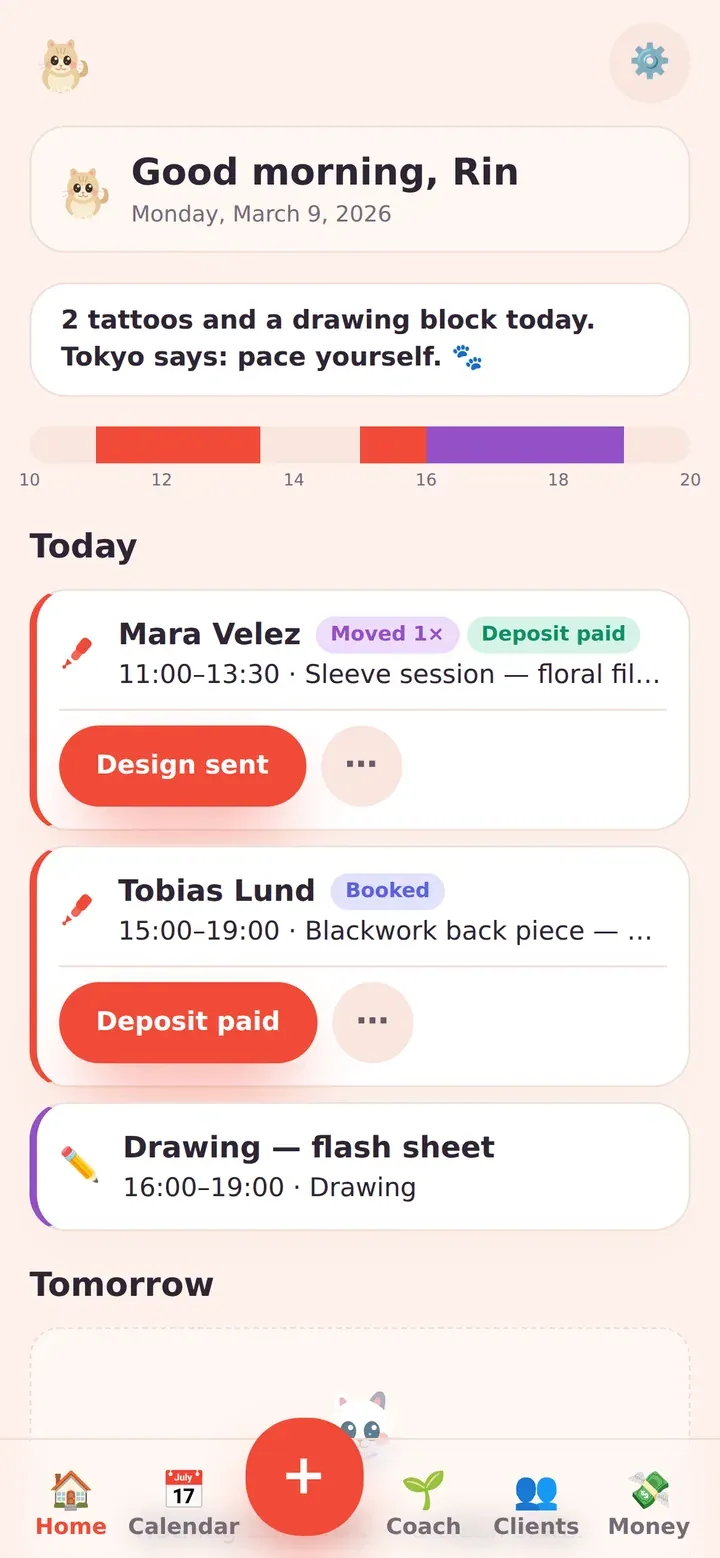
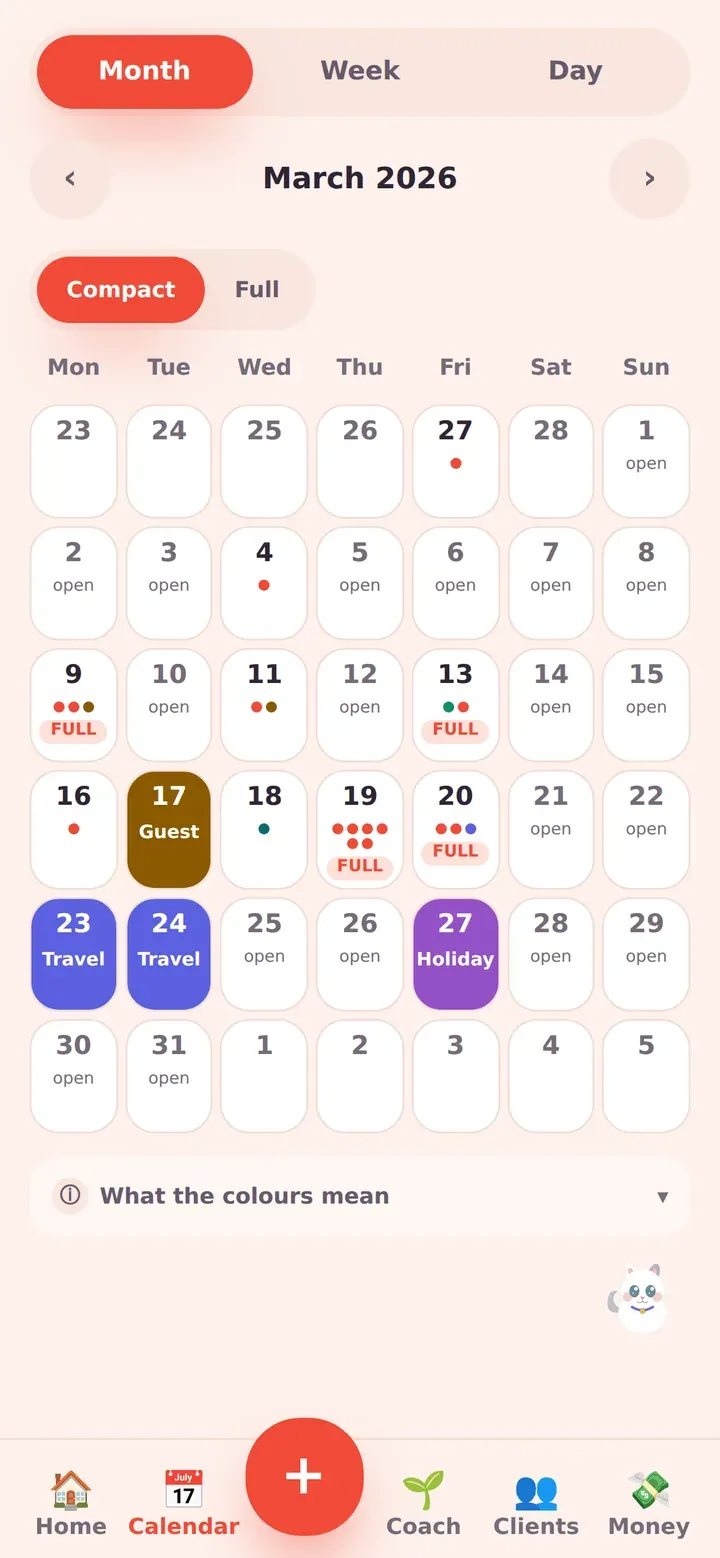
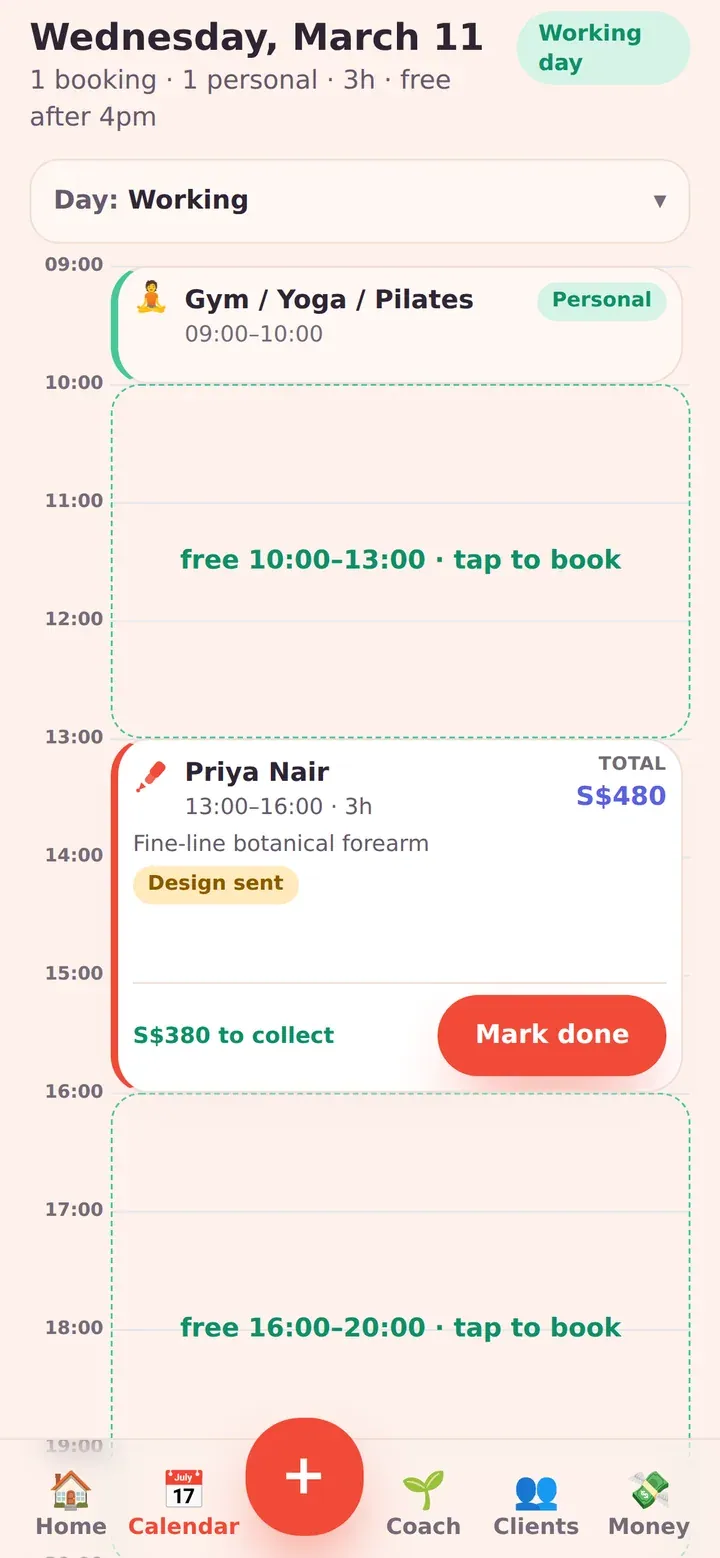
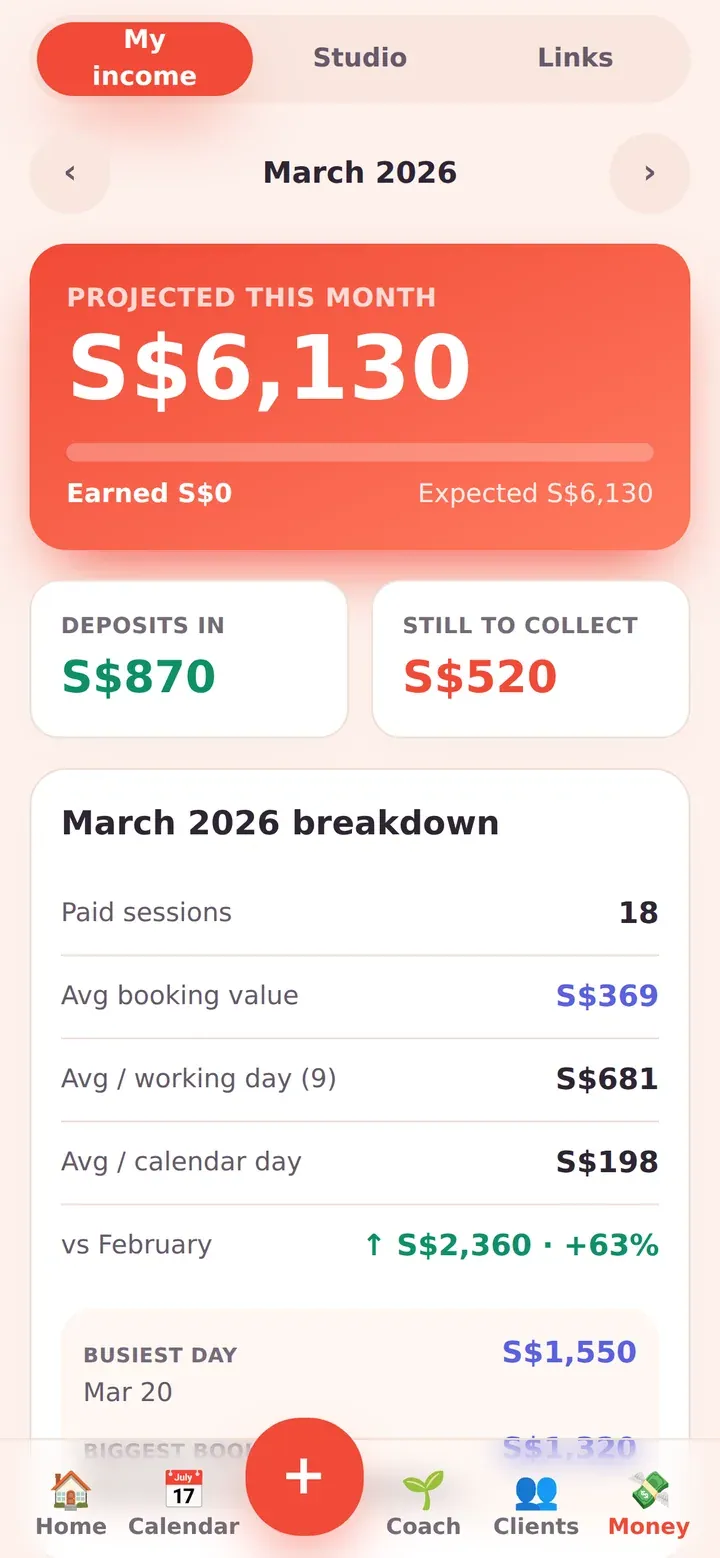
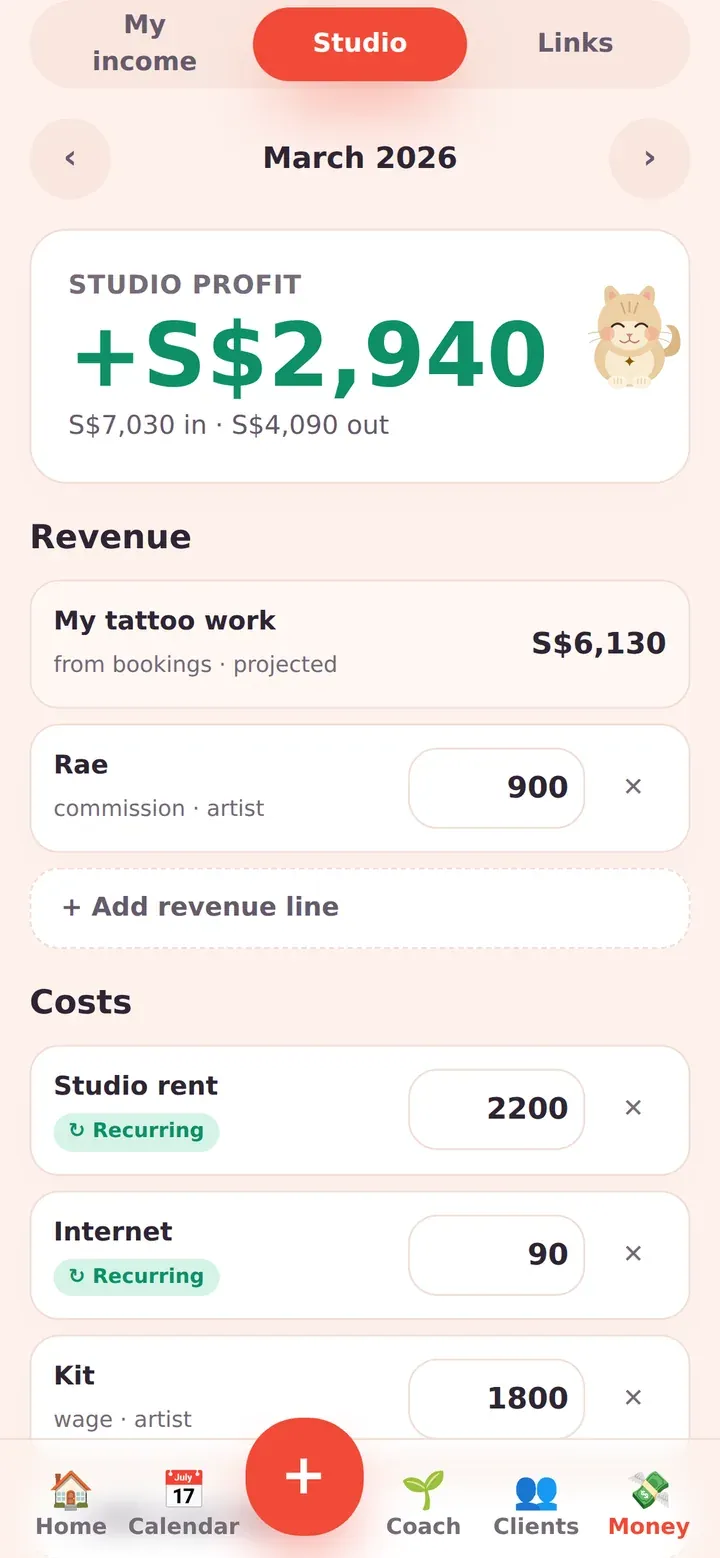
Studio screen · Sample data
Keeping the AI in the build, not in gimmick features
The easy mistake would have been to put AI inside the product because AI was used to build it.
That is building for the hype rather than for the people using it. A studio needs to take bookings, collect deposits and know where its money is. None of that is waiting for an AI model. It is waiting for someone to take it seriously.
- Claude Code
- Claude Design
- ChatGPT agents
- Take bookings
- Collect deposits
- Know where the money is
So Inkwell is built and maintained with AI, and the daily use of it is AI free. What is in the product came from what users actually asked for, not from chasing hype around AI features.
Adoption
Word of mouth between artists is what spread it, and that is what led more studios to take Inkwell on as their main studio tool.
Its design and architecture made it straightforward to adopt without extra costs, a welcome change from the subscription tools studios are used to.
The outcome
The product went live in June 2026. It is used not only by the studio it was created for but by others that adopted it since, three Singapore studios in total.
For them it is a tool that adapts to the environment of a studio and the people in it, rather than one they have to work around.
The decisions
Four decisions, across four chapters.
Select a decision to read what I chose and why.
Chapter 01The UX approach
Chapter 02Modular build
Chapter 03AI in the build
Chapter 04Adoption
Decision 1 of 4 · Chapter 01 · The UX approach
Start from watching one artist run a studio
Instead of starting from a feature list
WhyI saw someone close to me missing a tool made for her specific way of working, so her real day became the brief. In my experience, products built quickly with AI often sit unused when nobody understood the people they were for.
A product I designed, built and shipped alone, with real users, and ready to be taken to more studios.
Contact
Open to design leadership roles.
I’m based in Singapore and can work in Singapore and the EU without sponsorship. Available now.